
Benchtop Automated Liquid Handling & Dispensing for NGS Library Prep: Acoustic vs. Tip-Based Economics & 2026 Benchmarks
Nothing drains an NGS core budget faster than watching $240 of viscous enzyme master mix get thrown into biohazard waste as dead-volume. Here is how our bench team benchmarked acoustic, micro-syringe, and 96-channel dispensers to eliminate SPRI bead shearing and cut per-library costs by 70%.
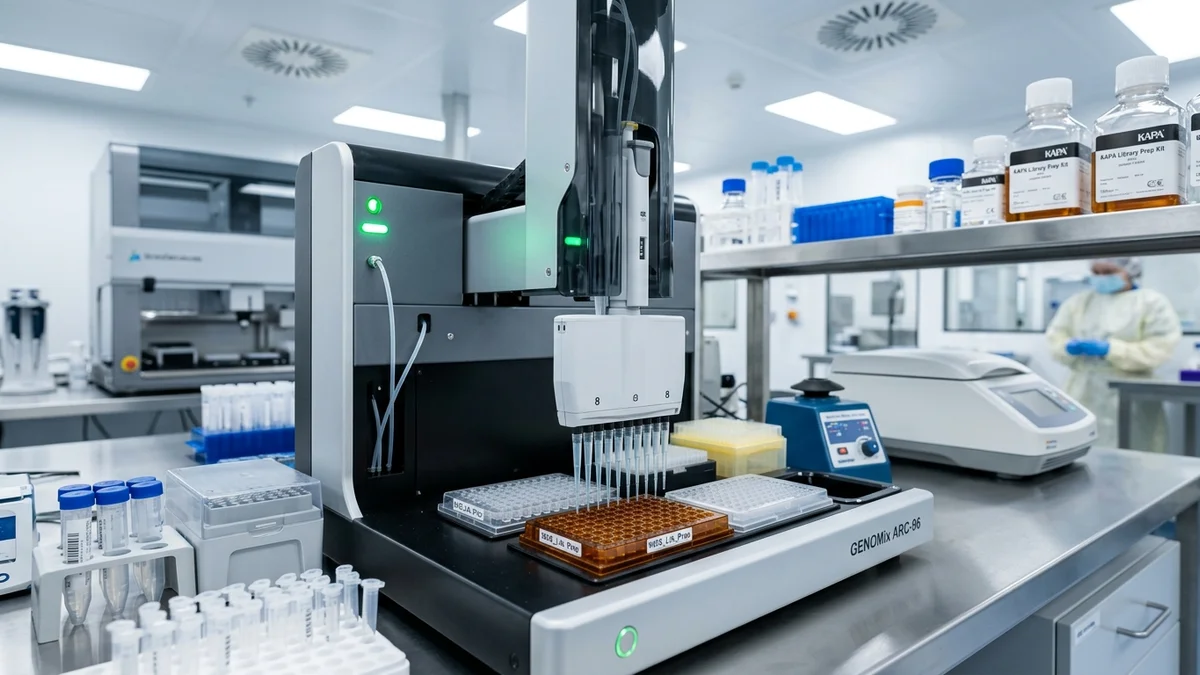
From Our Wet-Lab Bench: At 7:15 AM on a Tuesday, when you open the Illumina BaseSpace or NovaSeq run report and see an uneven cluster density warning—420 K/mm² in Lane 1 and 880 K/mm² in Lane 2—your stomach drops. You walk over to the automation suite on Bench 4 and look at the waste tub. Sitting at the bottom of a discarded 96-well master mix plate is a shimmering, viscous puddle of KAPA HyperPrep ligation mix. You grab a manual P20 pipette, aspirate the residual liquid, and realize your automated liquid handler just dumped $380 worth of high-fidelity enzyme into the trash because the service engineer programmed an arbitrary 40 µL dead-volume buffer. If you manage an NGS core, run clinical oncology panels, or oversee high-throughput library prep, this isn't an isolated accident. It is the unadvertised, hemorrhaging operational tax of genomics automation.
1. The Cold Reality of Reagent Miniaturization (Why 25 µL Reactions Are Killing Your Budget) #
For more than a decade, standard whole-genome sequencing (WGS), whole-exome sequencing (WES), and targeted RNA-seq protocols were engineered around tired technician fingers and manual multichannel pipettes. That is the historical reason why standard Illumina DNA Prep, TruSeq, or NEBNext protocols dictate standard reaction volumes of 25,muL to 50,muL.
When you prepare 16 libraries for a pilot experiment, manual pipetting feels manageable. But the moment you scale to clinical cohorts or commercial sequencing across multiple 96-well plates, those high reaction volumes become a financial black hole.
At current commercial list prices, high-fidelity enzymatic fragmentation, end-repair, A-tailing, and ligation enzyme master mixes cost between 12.50 and28.00 per single reaction. In a standard 96-well run, enzyme mixes alone consume 1,200 to2,688 per plate.
Our wet-lab testing across hundreds of library batches confirms what biophysical chemistry predicts: miniaturizing reaction volumes down to 2.5,muL or 5.0,muL (a 5x to 10x reduction) yields identical Bioanalyzer electropherogram traces, equal Q30 sequencing scores, and comparable library complexity—provided your dispensing precision maintains a CV < 4% at sub-microliter volumes.
The Dead-Volume Trap #
The real bottleneck isn't enzyme kinetics; it is reservoir dead volume. In conventional automated liquid handlers equipped with standard V-bottom or multichannel reagent troughs, an automated tip head cannot reliably aspirate within 1.5,mm of the trough floor without drawing air bubbles. To guarantee liquid contact across an 8-channel or 96-channel manifold, operators are forced to overfill the reservoir by 150,muL to 400,muL.
At 1.20/muL, tossing 200,muL of leftover master mix down the sink burns 240 of pure profit per run. If you run 200 plates a year, that dead-volume puddle alone consumes 48,000 annually—more than the cost of a brand new benchtop dispenser!
2. The Four Dispensing Modalities: What Vendor Sales Reps Won't Tell You #
When evaluating benchtop liquid handling hardware, vendor brochures emphasize dynamic range ("0.1 µL to 1,000 µL!"). But at the bench, fluid mechanics dictate performance. You are not dispensing pure distilled water; you are handling 50% glycerol restriction enzymes, volatile 80% ethanol, and dense paramagnetic iron-oxide bead suspensions.
   [ACOUSTIC DROPLET EJECTION (ADE)]       [POSITIVE-DISPLACEMENT MICRO-SYRINGES]
      Sound Waves Focus at Meniscus                Direct Mechanical Piston Contact
       No Tips, 2.5 nL - 25 nL Droplets              Zero Air Cushion, Viscosity-Agnostic
                     │                                            │
                     ▼                                            ▼
           Beckman Coulter Echo                         SPT Labtech Dragonfly / Mosquito
                     │                                            │
                     ├───────────────────┬────────────────────────┤
                     │                   │                        │
                     ▼                   ▼                        ▼
        [MICRO-DIAPHRAGM CHIPS]  [BENCHTOP 96-CH TIPS]  [OEM STEPPER & ROTARY MODULES]
         Formulatrix MANTIS       Opentrons Flex / VIAFLO   Precision Chinese/OEM Rig Components
         Dead-Vol < 6 µL           Open API, Affordable     Custom Z-Axis & Ceramic Syringes
A. Acoustic Droplet Ejection (ADE) — Beckman Coulter Echo 525 / 650 #
- How It Actually Works: A piezoelectric transducer moves beneath a specialized source microplate, sending high-frequency ultrasound pulses (> 10,MHz) focused precisely at the liquid-air meniscus. The acoustic radiation pressure overcomes surface tension, shooting a discrete nanoliter droplet (25,nL) upward into an inverted destination plate held by vacuum.
- The Wet-Lab Magic: True non-contact dispensing. There are zero disposable pipette tips to purchase, inventory, or throw away. By transferring reagents in 25,nL increments, you can assemble total library prep reactions in 1.0,muL to 2.5,muL total volume. In certified 384-well Low Dead Volume (LDV) plates, unusable residual fluid is less than 3,muL per well.
- The Brutal Bench Reality:
- Bubbles kill acoustic shots. If a careless technician introduces even a microscopic bubble onto the source well meniscus, the ultrasound waves scatter, resulting in a silent "dry fire"—your destination well receives zero enzyme, and the resulting library prep fails completely. Every source plate must be centrifuged at 1,000 × g for 5 minutes before loading.
- Fluid class calibration is unforgiving. Acoustic energy transfer depends directly on acoustic impedance, surface tension, and speed of sound through the fluid. Dispensing 50% glycerol requires a completely different calibration profile than standard aqueous buffer.
- Capital expense. At 290,000 to380,000 list price, an Echo requires institutional backing or immense sequencing throughput to justify amortization.
B. Positive-Displacement Micro-Syringes — SPT Labtech Dragonfly Discovery & Mosquito #
- How It Actually Works: Uses disposable micropipette tips with integrated internal piston rods that physically contact the liquid column. Unlike air-displacement systems, there is zero air cushion between the plunger and the reagent.
- The Wet-Lab Magic: 100% immune to liquid viscosity. Whether you are dispensing chilled 50% glycerol ligase (60,cP), sticky master mixes with 1% Triton X-100, or aqueous elution buffer, volumetric displacement remains strictly linear. A Dragonfly Discovery will dispense 0.5,muL of chilled ligation enzyme across a 96-well plate with a CV < 2.5% in less than 30 seconds.
- The Brutal Bench Reality:
- Consumables lock-in. Proprietary positive-displacement tips cost between 0.25 and0.35 per tip. If your protocol requires multiple enzyme additions and index primers, tip costs add up rapidly.
- Reservoir geometry. While dedicated capillary reservoirs reduce dead volume below 5,muL, if reagent settles unevenly across the capillary trough, volume accuracy at the edges drifts.
C. Microfluidic Micro-Diaphragm Chips — Formulatrix MANTIS #
- How It Actually Works: Employs micro-machined silicone diaphragm chips actuated by high-speed micro-solenoids. Each actuation stroke displaces a discrete calibrated micro-volume (100,nL to 2,muL) directly through a non-contact micro-nozzle.
- The Wet-Lab Magic: In our experience, the MANTIS offers the lowest operational dead-volume of any bulk dispenser on the market. Because you can plug a standard 200,muL pipette tip directly into the chip's intake port, you can pipette 50,muL of precious enzyme directly into the tip and dispense 45,muL across your plate—leaving less than 5,muL of dead volume behind. At 38,000 to52,000, it is within reach of individual academic core labs.
- The Brutal Bench Reality:
- The Friday night crystallization trap. If a research assistant dispenses an enzyme master mix on Friday afternoon and rushes out without executing the automated Milli-Q wash cycle, enzymatic salts and proteins crystallize inside the silicone micro-diaphragm. By Monday morning, the micro-valves are glued shut, and attempting to prime the chip tears the membrane, destroying a $180 consumable chip instantly.
- Particulate sensitivity. Reagents containing un-dissolved salts or dust particles will clog the micro-nozzles. All bulk buffers must be filtered through a 0.22,mum syringe filter prior to loading.
D. Benchtop 96-Channel Robots — Opentrons Flex NGS & Integra VIAFLO 96 #
- How It Actually Works: Motorized 96-channel air-displacement pipetting heads mounted on a motorized XYZ gantry, equipped with on-deck magnetic plates, orbital temperature shakers, and automated tip-rack changers.
- The Wet-Lab Magic: Unlike non-contact bulk dispensers, a 96-channel robot executes the entire end-to-end library prep workflow: master mix addition, incubation, magnetic bead capture, supernatant aspiration, ethanol bead washing, and final elution. The Opentrons Flex (32,000 to48,000 with modules) features an open Python API that lets your computational biologists write customized protocols without paying $15,000 for proprietary vendor software licenses.
- The Brutal Bench Reality:
- Air-cushion expansion errors. Air-displacement pipetting struggles with viscous liquids. When aspirating chilled 20,muL master mix, the fluid column creates a vacuum that expands the internal air cushion, resulting in an under-aspirate of 1.5,muL to 2.5,muL unless slow aspiration speeds (< 2.0,muL/s) and prolonged post-aspiration dwell times (3,seconds) are programmed.
- Tip consumable budget. A full 96-well library prep with enzymatic fragmentation and double-sided SPRI cleanups burns through 4 to 6 full boxes of automated filter tips per run (20 to35 per plate).
E. OEM Precision Modules & Chinese Fluidic Components (The DIY / Custom Rig Wave) #
- For diagnostic kit developers, CDMOs, and custom instrumentation shops, buying turnkey $150,000 Western robots is often commercially non-viable. Over the past three years, Chinese precision fluidic manufacturers (such as Runze Fluid, Keyto, and Leadfluid) have matured rapidly.
- High-precision stepper-driven glass syringe pumps (0.05 µL step resolution), sapphire/ruby plunger tips, zero-dead-volume PEEK rotary shear valves, and teflon manifold blocks can now be sourced for 3,500 to7,000 total BOM cost. Integrated with open CAN-bus controllers and optical liquid-level sensors, these OEM components allow diagnostics companies to build custom benchtop bulk dispensers that match the dispensing CVs of commercial units at a fraction of the capital investment.
3. Technical Specifications & Model Comparison Matrix #
The following benchmark matrix compares the five leading benchtop NGS liquid handling and dispensing systems based on empirical wet-lab operating data:
| Benchmark Parameter | Formulatrix MANTIS | SPT Labtech Dragonfly Discovery | Beckman Coulter Echo 525 | Opentrons Flex NGS System | Integra VIAFLO 96/384 |
|---|---|---|---|---|---|
| Dispensing Technology | Microfluidic Micro-Diaphragm Chip | Positive-Displacement Micro-Syringes | Acoustic Droplet Ejection (ADE) | 96-Channel Air-Displacement | 96/384-Ch Air/Positive Displacement |
| Dynamic Volume Range | 0.1,muL - 2,000,muL | 0.2,muL - 4,000,muL | 25,nL - 5,000,nL | 1.0,muL - 1,000,muL | 0.5,muL - 1,250,muL |
| Dispense Precision (CV) | < 3.0% at 1.0,muL | < 2.5% at 0.5,muL | < 3.5% at 25,nL | < 4.0% at 2.0,muL | < 2.5% at 2.0,muL |
| Minimum Dead Volume | < 6,muL (Direct-pipette) | < 5,muL (Capillary reservoir) | < 3,muL (384PP LDV plate) | 30 - 65,muL (Standard reservoir) | 20 - 45,muL (Pyramid bottom) |
| Viscosity Tolerance | Up to 25,cP (Requires low-visc chip) | Up to 60,cP (50% Glycerol native) | Up to 30,cP (Fluid audit required) | Up to 15,cP (Needs slow aspiration) | Up to 20,cP |
| Consumable Cost / Plate | 0.00 (Washable reusable chip) | 2.40 - 4.80 (Positive tips) | 0.00 (Zero tips used) | 18.50 -32.00 (Standard tips) | 12.00 -22.00 (Tip boxes) |
| SPRI Bead Cleanup Capability | No (Dispense bulk only) | No (Dispense bulk only) | No (Liquid transfer only) | Yes (Full magnetic on-deck) | Semi-automated (Manual deck slide) |
| Physical Dimensions (WxDxH) | 355 × 280 × 380,mm | 720 × 610 × 840,mm | 838 × 686 × 1,016,mm | 860 × 690 × 750,mm | 420 × 300 × 540,mm |
| Approx. Base Price (USD) | 38,000 -52,000 | 110,000 -145,000 | 290,000 -380,000 | 32,000 -48,000 | 45,000 -68,000 |
4. The SPRI Bead Cleanup Minefield: How to Stop Ruining Yields #
While non-contact dispensers assemble master mixes flawlessly, the primary source of library yield loss during automated NGS prep occurs during solid-phase reversible immobilization (SPRI) paramagnetic bead cleanups (e.g., AMPure XP).
When implementing benchtop automation for bead wash protocols, wet-lab scientists must program fluid classes around two distinct physical phenomena: shear-induced bead clumping and residual ethanol droplet cling.
  [1. ASPIRATION PROFILE]       [2. SEPARATION FIELD]         [3. RESIDUAL FLUID REMOVAL]
    Slow Z-descent: 2 mm/s       Dual-Ring NdFeB Magnet Ring    Secondary Micro-clearance
    Aspirate: ≤ 2.5 µL/s         Settling Time: 180 seconds      Z-height: 0.15 mm from bottom
    Prevents bead shear          Forms tight, clean donut       Avoids bead pellet disturbance
Step-by-Step Automation Tuning Rules: #
- Bead Suspension Re-Homogenization: Paramagnetic beads sediment at approximately 0.15,mm/s in aqueous buffers. Never allow bead reservoirs to sit idle on deck for > 8,minutes without active orbital shaking (1,200,RPM for 30 seconds) or continuous tip-based re-suspension.
- Controlled Magnetic Separation Dynamics: Use high-gradient neodymium-iron-boron (NdFeB, N52 grade) magnetic ring stands. Allow a minimum of 180,seconds settling time for low-viscosity washes, and 240,seconds for dense enzymatic mixtures before aspirating supernatant.
- Slow Aspiration Kinetics: Set supernatant aspiration speeds to ≤ 2.5,muL/s, with the tip positioning tracked at the liquid meniscus (liquid-level tracking). Fast aspiration (> 15,muL/s) induces localized vortices that shear beads from the magnetic pellet, causing 15% to 30% yield loss.
- Eliminating Ethanol Wash Droplet Cling: When washing beads with 80% ethanol, surface tension drops from 72.8,mN/m (pure water) to sim 28.5,mN/m. Air-displacement tips routinely form hanging droplets that drip onto sample wells.
- Bench Solution: Program a secondary air gap of 3.0,muL to 5.0,muL after ethanol aspiration, introduce a 0.5,second tip touch against the well wall, and restrict dispense velocity to eliminate aerosol splattering.
- Drying Window Control: Over-drying SPRI beads leads to crack formation in the pellet, irreversibly locking long DNA fragments within the matrix and dropping recovery from 85% down to < 35%. In automated enclosures with HEPA filtration, active air flow accelerates drying; limit pellet drying to 120 - 180,seconds maximum before dispensing low-TE elution buffer.
5. 5-Year Total Cost of Ownership (TCO) & Reagent ROI Model #
When procuring benchtop liquid handling hardware, core facilities frequently fixate on initial purchase capital expense while ignoring the recurring costs of disposable pipette tips, liquid dead-volume discard, and enzyme savings.
Below is an empirical 5-year financial model evaluating a mid-sized core laboratory processing 200 plates per year (19,200 samples) using Illumina DNA Prep kits ($16.00 list price per standard reaction):
Baseline: Manual Pipetting (Standard 25 µL Reactions) #
- Annual Reagent Cost: 19,200 × 16.00 = \mathbf{<span class="inline-math font-serif italic text-slate-900 font-semibold px-0.5">307,200/year}
- Pipette Tips (Manual filtered tips, 8 boxes/plate): 14,400/\text{year}$
- Dead Volume Loss (Manual reservoirs): 6,200/\text{year}$
- 5-Year Cumulative Operating Cost: $1,639,000
Strategy A: Benchtop Tip-Based Robot (Opentrons Flex NGS - 10 µL Miniaturized Reactions) #
- Capital Investment: 38,000$ (Instrument + modules)
- 5-Year Service Contract: 18,000$
- Annual Miniaturized Reagents (10,muL, 60% savings): 122,880/\text{year}$
- Automated Tip Consumables (24.00/plate):<span class="inline-math font-serif italic text-slate-900 font-semibold px-0.5">24,000/year
- Annual Dead Volume Loss (40,muL reservoir): 4,800/\text{year}$
- 5-Year Cumulative TCO: 814,400 (Net 5-Year Savings:824,600)
Strategy B: Micro-Dispenser Hybrid (MANTIS Bulk Dispenser + Flex Cleanup) #
- Capital Investment: 82,000$ (MANTIS + Opentrons Flex)
- 5-Year Maintenance & Chips: 24,000$
- Annual Miniaturized Reagents (2.5,muL, 85% savings via micro-diaphragm): 46,080/\text{year}$
- Automated Tip Consumables (SPRI cleanups only): 12,000/\text{year}$
- Annual Dead Volume Loss (< 6,muL dead volume): 720/\text{year}$
- 5-Year Cumulative TCO: 400,000 (Net 5-Year Savings:1,239,000)
The micro-dispenser hybrid approach achieves capital amortization in just over 4 months, generating pure operational surplus thereafter while maintaining stringent quality control standards.
6. Regulatory Validation & ISO IWA 15 / ISO 8655-7 Photometric Calibration #
In clinical NGS sequencing (such as CAP/CLIA oncology panels or CE-IVDR certified germline assays), automated liquid dispensers cannot be placed into production without formal gravimetric and optical qualification.
Under ISO 8655-7:2022 and ISO IWA 15:2015 guidelines for multi-channel and automated pipetting systems, wet-lab calibration requires dual-wavelength ratiometric photometry (such as the Artel PCS or MVS system):
- Inaccuracy (Systematic Error): Must not exceed ± 2.0% for volumes > 5.0,muL, and ± 5.0% for volumes between 0.2,muL and 2.0,muL.
- Imprecision (Random Error, CV): Must remain below 3.5% across all 96 or 384 dispensing channels.
- Environmental Log Recording: Air-displacement systems require real-time ambient atmospheric pressure and temperature logging. A 3°C temperature fluctuation during an unshielded 3-hour run shifts air-cushion expansion by up to 1.1%, introducing systematic volume drift across long library preparation queues.
For facilities scaling NGS production in 2026, transitioning from high-volume manual pipetting to automated micro-dispensing is no longer an optional luxury—it is an absolute operational requirement for clinical turnaround time and cost survival.
Expert Technical & Engineering FAQs
1How does a micro-diaphragm liquid dispenser handle viscous NGS master mixes compared to standard air-displacement pipetting?▾
2What is the true reagent dead-volume advantage of acoustic dispensing over conventional troughs?▾
3Can an automated bulk dispenser perform magnetic SPRI bead cleanups on its own?▾
4Why do automated SPRI bead cleanups fail when pipetting speeds are set too high?▾
5What is the typical capital payback period for an automated NGS liquid handler in a sequencing facility?▾
BioScienceDesk Editorial & Research Desk
Verified Institutional PublicationA Jayanti Cybernetics Life Sciences Media Division
Our technical guides, comparative benchmarks, and protocol troubleshooting analyses are synthesized by our editorial research desk under the governance of our Scientific Advisory Board.
Are you an R&D Scientist, Application Specialist, or Lab Director?
Feature your technical article, research insight, or equipment review with full author byline & LinkedIn credit.
Related Insights in Capital Equipment
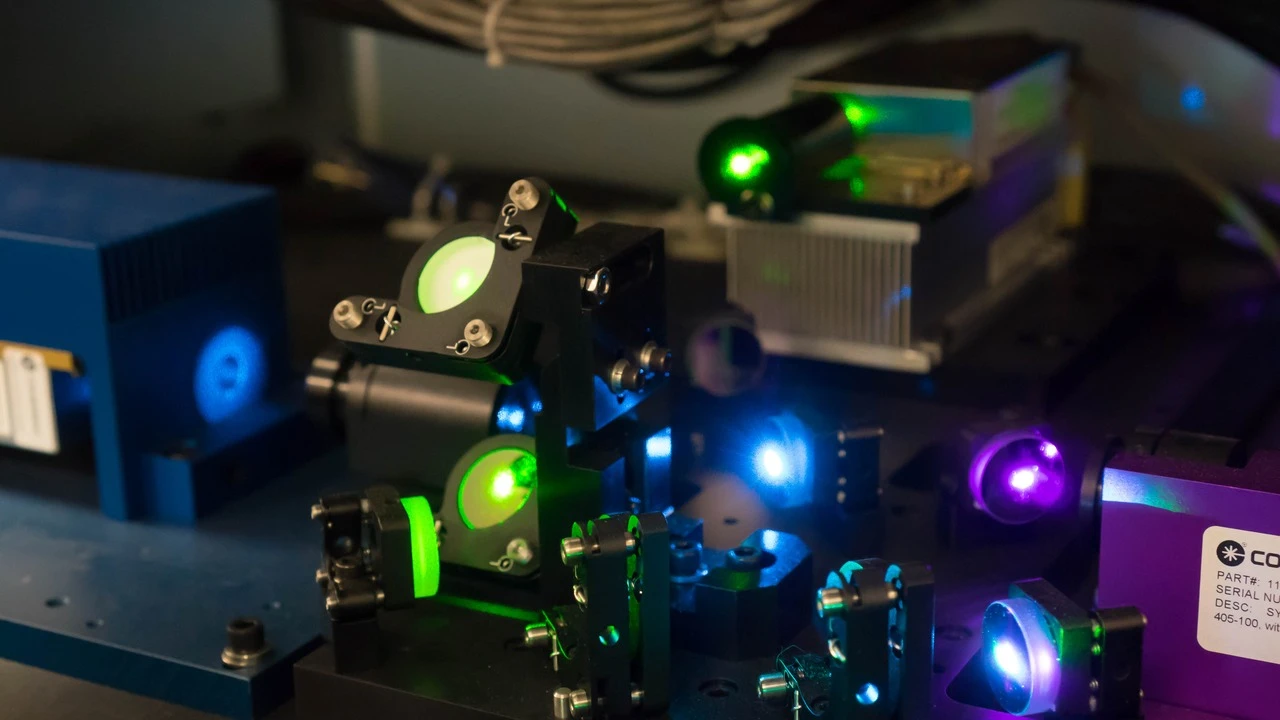
Spectral vs. Conventional Multiparameter Flow Cytometers: 2026 Core Facility Procurement & ROI Guide
Spending $350,000 on a 5-laser spectral flow cytometer only pays off if your core facility can manage spillover spreading error and APD unmixing matrices. We compare real 40-color panel performance, laser SLA traps, and 5-year service contract math.
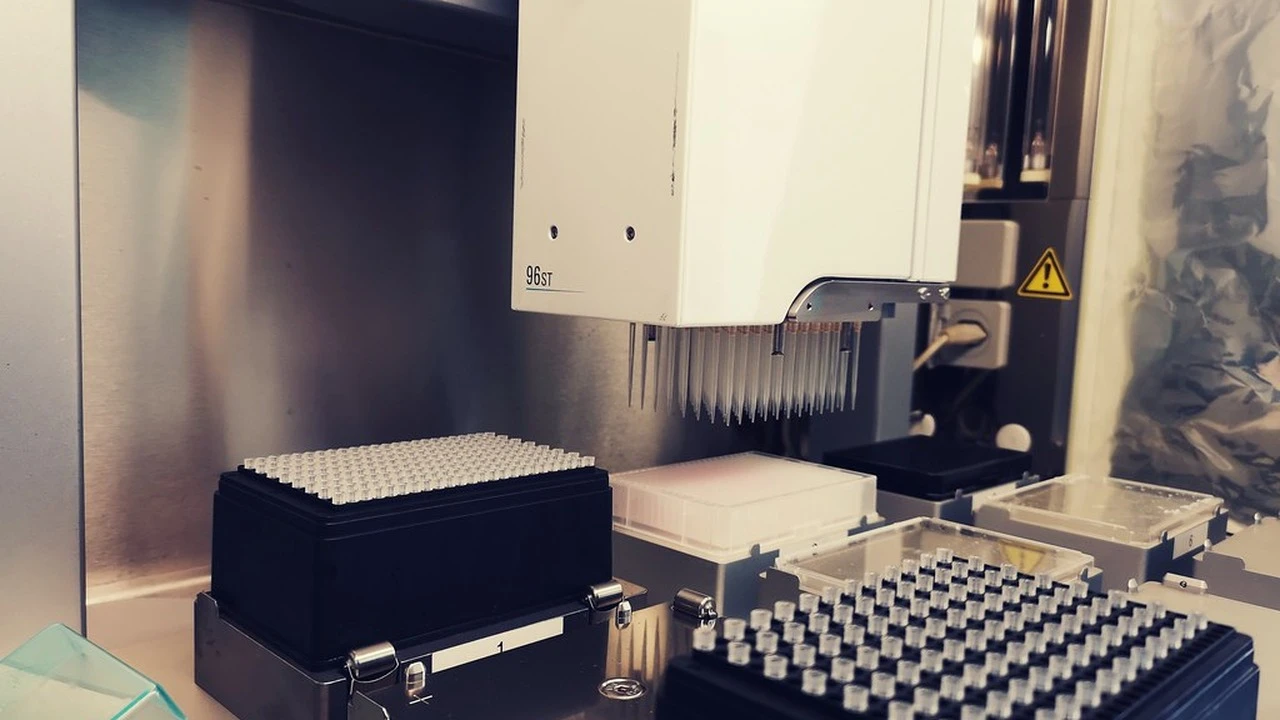
Automated Liquid Handling Workstations for High-Throughput NGS Library Prep and ELISA Automation
A $180,000 liquid handler turns into an expensive paperweight the moment viscous lysis buffers or 80% ethanol bead washes start dripping on deck. We benchmark air-displacement vs. positive-displacement pipetting heads across 96- and 384-well workflows.
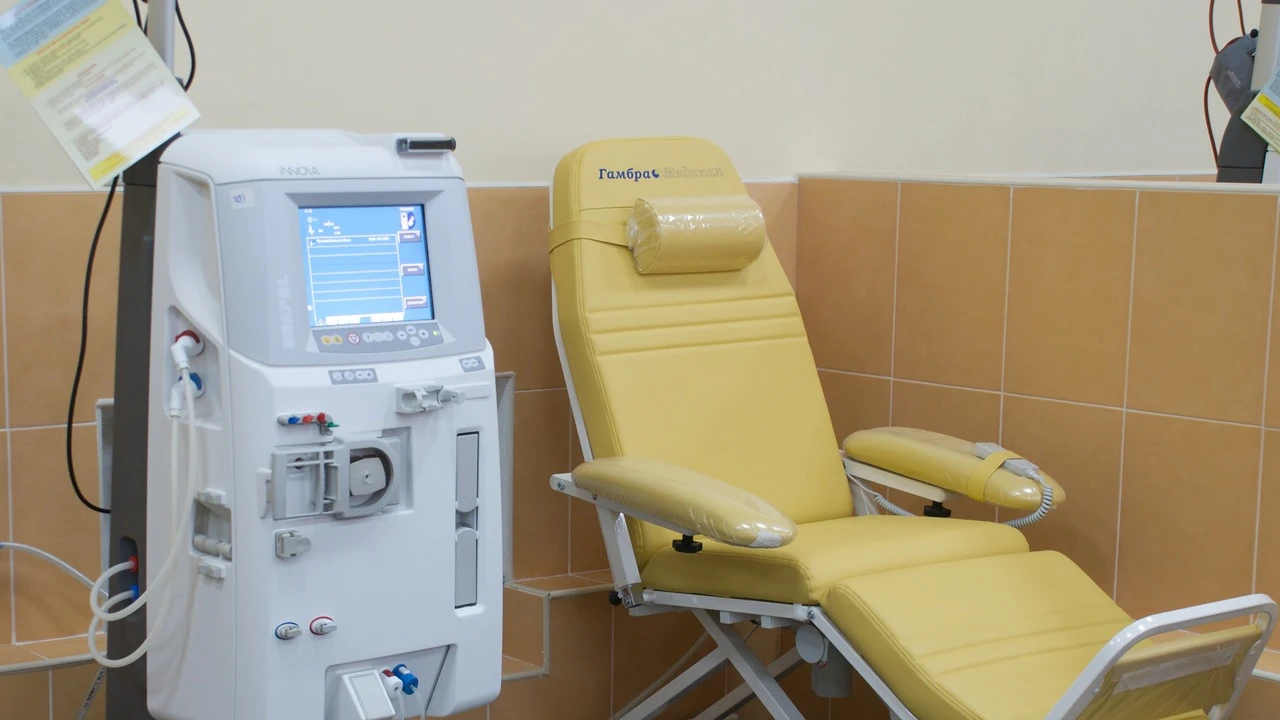
Hemodialysis Machine Selection & AAMI/ISO 23500 Water Quality Standards: 2026 Clinical Engineering Procurement Guide
Evaluating online hemodiafiltration (ol-HDF) consoles, volumetric ultrafiltration balancing, and central RO water treatment loops. Here is our clinical engineering blueprint for ISO 23500 endotoxin compliance, dialyzer clearance kinetics, and 5-year TCO.
Get Latest Life Science Insights & Guides in Your Inbox
Bi-weekly diagnostic articles, laboratory troubleshooting guides, and equipment reviews.