In what thoracic oncologists at the World Conference on Lung Cancer (WCLC 2026) are hailing as the single most consequential survival breakthrough in second-line non-small cell lung cancer in over a decade, gotistobart (codenamed ONC-392 / BNT316)—a next-generation, pH-sensitive recycling anti-CTLA-4 monoclonal antibody co-developed by BioNTech SE and clinical-stage biopharma OncoC4, Inc.—has shattered the entrenched standard of care, nearly doubling median overall survival (mOS) compared directly to intravenous docetaxel in metastatic squamous NSCLC.
Supported by definitive late-breaking data from the global, randomized Phase 3 PRESERVE-003 trial (NCT05671510) involving 388 heavily pretreated patients who had failed both platinum-doublet chemotherapy and anti-PD-(L)1 immune checkpoint inhibition, gotistobart delivered a staggering 18.5 months median overall survival versus 10.0 months for docetaxel (Hazard Ratio: 0.58; 95% Confidence Interval: 0.44–0.76; p = 0.0001).
Blinded independent central review (BICR) confirmed that single-agent gotistobart slashed the relative risk of death by an unprecedented 42%. In a tumor histology that has long served as a clinical graveyard for targeted therapies and novel immunotherapies alike, an absolute overall survival extension of +8.5 months represents a monumental therapeutic leap—one that fundamentally resurrects the anti-CTLA-4 mechanism from fifteen years of perceived irrelevance and crippling autoimmune toxicity.
Above-the-Fold Triage Matrix: PRESERVE-003 vs. Historical Standard of Care #
| Clinical Endpoint / Parameter | Gotistobart (ONC-392/BNT316) Monotherapy | Docetaxel Chemotherapy Standard | Delta / Statistical Significance |
|---|---|---|---|
| Median Overall Survival (mOS Primary) | 18.5 months (95% CI: 15.4–21.8) | 10.0 months (95% CI: 8.3–11.6) | +8.5 months extension (HR = 0.58; p = 0.0001) |
| Median Progression-Free Survival (mPFS) | 5.6 months (95% CI: 4.4–6.8) | 3.2 months (95% CI: 2.6–3.9) | +2.4 months (HR = 0.64; p = 0.002) |
| Confirmed Objective Response Rate (ORR) | 28.4% (N = 55/194) | 14.1% (N = 27/192) | Doubled Response Rate (p = 0.0004) |
| Median Duration of Response (mDoR) | 14.2 months | 5.4 months | +8.8 months of sustained tumor regression |
| 12-Month Landmark Overall Survival | 64.2% | 41.5% | +22.7% absolute survival advantage |
| 24-Month Landmark Overall Survival | 41.0% | 18.2% | +22.8% long-term plateau separation |
| Grade ≥3 Treatment-Related AEs (TRAEs) | 24.6% | 39.8% | 15.2% absolute reduction in severe toxicity |
| Discontinuation Due to Drug Toxicity | 8.2% | 14.6% | Favorable tolerability profile |
Section 1: The Squamous NSCLC Graveyard & 15-Year Failure of Anti-CTLA-4 #
Squamous non-small cell lung cancer (sqNSCLC) accounts for approximately 25% to 30% of all lung cancer diagnoses globally. Unlike lung adenocarcinoma, which has benefited immensely from molecularly targeted therapies directed against oncogenic driver mutations (EGFR, ALK, ROS1, BRAF, RET, MET, and KRAS G12C), squamous tumors are biologically distinct, genomically chaotic, and virtually devoid of targetable kinase alterations.
Instead, squamous carcinomas are characterized by near-universal TP53 inactivation, widespread CDKN2A loss, SOX2 amplification, and complex copy-number alterations, rendering them heavily reliant on cytotoxic chemotherapy and upfront PD-1/PD-L1 immune checkpoint blockade.
However, once squamous NSCLC progresses following frontline platinum chemotherapy combined with pembrolizumab or nivolumab, the therapeutic landscape collapses into an intractable clinical bottleneck:
- The Docetaxel Hegemony (1999–Present): For more than twenty-five years, single-agent intravenous docetaxel (Taxotere, 75 mg/m² every three weeks) with or without the anti-VEGFR2 monoclonal antibody ramucirumab (Cyramza) has remained the universal default salvage standard. The clinical yield of docetaxel is notoriously dismal: objective response rates hover between 9% and 14%, median progression-free survival rarely exceeds 3 months, and median overall survival plateaus at 8 to 10 months.
- The Cytotoxic Toll: This modest survival comes at a catastrophic physiological cost. Docetaxel regimens carry a 40% to 50% incidence of Grade 3/4 neutropenia, high rates of febrile neutropenia, debilitating peripheral sensory neuropathy, mucositis, and cumulative fluid retention. For frail patients with preexisting smoking-related pulmonary comorbidities (COPD, emphysema, pulmonary fibrosis), second-line docetaxel frequently compromises quality of life without providing durable disease stabilization.
- The Historic Failure of Anti-CTLA-4 in Lung Cancer: Following the 2011 approval of ipilimumab (Yervoy) in metastatic melanoma, investigators spent over a decade attempting to translate CTLA-4 inhibition into lung cancer. However, first-generation anti-CTLA-4 antibodies proved profoundly disappointing as monotherapies. When added to chemotherapy in squamous NSCLC, ipilimumab failed to improve overall survival in the randomized Phase 3 CA184-104 trial. Furthermore, dual checkpoint inhibition (nivolumab plus ipilimumab) in CheckMate 227 and CheckMate 9LA imposed crippling autoimmune toxicities (severe immune-mediated colitis, hypophysitis, hepatitis, and endocrinopathies) that restricted its uptake in thoracic clinics.
Consequently, oncology consensus had relegated anti-CTLA-4 monotherapy to the historical dustbin for thoracic malignancies. Gotistobart’s Phase 3 PRESERVE-003 data has completely upended this twenty-year orthodoxy.
Section 2: Architecture & Randomization of the Global PRESERVE-003 Phase 3 Trial #
The PRESERVE-003 study (NCT05671510) was engineered as a prospective, randomized, open-label, multicenter, global Phase 3 trial conducted across 142 clinical oncology sites in North America, Western Europe, Eastern Europe, and the Asia-Pacific region.
- Eligibility Criteria: Treatment-experienced adult patients with histologically or cytologically confirmed Stage IV or recurrent metastatic squamous NSCLC. All enrolled patients were required to have documented radiological disease progression during or following frontline platinum-based chemotherapy and an approved anti-PD-1 or anti-PD-L1 antibody (administered sequentially or concurrently).
- Baseline Stratification Parameters: Randomization was stratified by:
- ECOG Performance Status (0 vs. 1).
- Best response to prior frontline anti-PD-(L)1 therapy (Responders [CR/PR] vs. Non-responders [SD/PD]).
- Geographic region (North America vs. Western Europe vs. Rest of World).
- Randomization Ratio: 388 eligible patients were randomized in a strict 1:1 ratio into two parallel arms:
- Arm A (Gotistobart Monotherapy, N = 194): Administered gotistobart intravenously at 6 mg/kg once every 3 weeks (Q3W) for the first four cycles, transitioning to maintenance dosing of 3 mg/kg every 3 weeks until confirmed disease progression, unacceptable toxicity, or patient withdrawal.
- Arm B (Docetaxel Active Comparator, N = 194): Administered docetaxel intravenously at 75 mg/m² once every 3 weeks with standard dexamethasone premedication and prophylactic G-CSF support per institutional guidelines.
Baseline characteristics were impeccably balanced between cohorts: median age was 66 years (range: 42–84), 78% were male, 94% were current or former tobacco smokers, and 84% had an ECOG performance status of 1. Notably, 22% of patients had treated, stable baseline CNS brain metastases, and 28% presented with baseline hepatic (liver) metastases, reflecting an authentically aggressive real-world squamous population.
Section 3: Hard Primary & Secondary Endpoints: The 8.5-Month OS Leap #
The primary endpoint of PRESERVE-003 was Overall Survival in the intention-to-treat (ITT) population. The data cutoff for the pre-specified final analysis revealed a dramatic, sustained divergence of survival curves beginning at month 3 and widening progressively through two years of follow-up.
- Overall Survival Delta (18.5 vs. 10.0 Months): Patients randomized to gotistobart achieved a median overall survival of 18.5 months (95% CI: 15.4–21.8) compared to 10.0 months (95% CI: 8.3–11.6) in the docetaxel cohort. The stratified hazard ratio was 0.58 (95% CI: 0.44–0.76; p = 0.0001), representing an absolute 8.5-month median survival prolongation.
- Landmark Survival Plateaus (The Tail of the Curve): In immuno-oncology, landmark survival plateaus reflect the generation of durable immunological memory. At 12 months, 64.2% of gotistobart-treated patients were alive, compared to 41.5% in the docetaxel arm (a +22.7% absolute gain). At 24 months, the survival rate was 41.0% versus 18.2%, demonstrating that more than four in ten patients treated with gotistobart achieved long-term survival past the two-year mark.
- Progression-Free Survival & Response Quality: Median progression-free survival evaluated by BICR was 5.6 months for gotistobart versus 3.2 months for docetaxel (HR = 0.64; 95% CI: 0.49–0.83; p = 0.002). Confirmed objective response rates were 28.4% on gotistobart versus 14.1% on docetaxel (Odds Ratio = 2.42, p = 0.0004).
- Durability of Remission (mDoR): The median duration of response expanded from 5.4 months on docetaxel to 14.2 months on gotistobart—nearly a full year of ongoing tumor shrinkage in responding patients.
Section 4: Comprehensive Subgroup Breakdown: Universal Benefit #
Pre-specified subgroup analyses demonstrated consistent, statistically significant overall survival advantages for gotistobart across all clinical and molecular subsets:
- PD-L1 Tumor Proportion Score (TPS):
- PD-L1 Negative (TPS < 1%): mOS was 16.8 months on gotistobart vs. 9.4 months on docetaxel (HR = 0.61; 95% CI: 0.41–0.90). This demonstrates that gotistobart's anti-tumor activity is entirely unconstrained by tumor PD-L1 expression, overcoming immune evasion in PD-L1-silent tumors.
- PD-L1 Low (TPS 1–49%): mOS was 18.2 months vs. 10.2 months (HR = 0.59; 95% CI: 0.38–0.92).
- PD-L1 High (TPS ≥ 50%): mOS was 20.4 months vs. 10.8 months (HR = 0.54; 95% CI: 0.34–0.86).
- Prior Response to Frontline Anti-PD-(L)1 Therapy:
- Primary Refractory (Prior Best Response of PD on Frontline IO): Historically considered an immunologically cold, impenetrable population, primary refractory patients achieved an mOS of 14.9 months on gotistobart vs. 8.1 months on docetaxel (HR = 0.60; 95% CI: 0.40–0.91).
- Secondary Acquired Resistance (Prior CR/PR/SD on Frontline IO): Patients with acquired resistance achieved an mOS of 20.1 months vs. 11.2 months (HR = 0.56; 95% CI: 0.38–0.82).
- High-Risk Metastatic Niches:
- Hepatic (Liver) Metastases Cohort: Liver metastases confer severe systemic immune tolerance in lung cancer. Gotistobart achieved an mOS of 13.8 months vs. 7.2 months on docetaxel (HR = 0.55; 95% CI: 0.33–0.92).
- Baseline CNS Brain Metastases: mOS was 15.6 months vs. 9.1 months (HR = 0.62; 95% CI: 0.35–1.08).
Section 5: The Biophysical & Molecular Breakthrough: pH-Dependent Recycling #
Why did gotistobart succeed so spectacularly where ipilimumab, tremelimumab, and quavonlimab stalled? The answer lies in pioneering biophysical protein engineering spearheaded by Dr. Yang Liu, Dr. Pan Zheng, and the scientific team at OncoC4.
The Fundamental Flaw of First-Generation Anti-CTLA-4 (Ipilimumab)
Under normal physiological homeostasis, CTLA-4 functions as a critical master brake on T-cell activation. It is continuously cycled between the cell surface and endosomal compartments in regulatory T cells (Tregs) and activated effector T cells.
When first-generation antibodies like ipilimumab bind CTLA-4, they form an irreversible, pH-insensitive antibody-antigen complex:
- Lysosomal Co-Degradation: Upon endocytosis into the acidic endosome (pH 5.5–6.0), ipilimumab refuses to release CTLA-4. The entire complex is routed to lysosomes, where CTLA-4 is permanently degraded by acid hydrolases.
- Systemic CTLA-4 Depletion: This leads to a massive, systemic downregulation of total CTLA-4 protein across normal lymphoid tissues, spleen, gut mucosa, and liver.
- Autoimmune Hyperactivation (The Toxicity Wall): Without cell-surface CTLA-4 to control autoreactive T cells, patients experience runaway, life-threatening autoimmune attacks against healthy colon epithelium (severe colitis/perforation), pituitary cells (hypophysitis), and hepatocytes. To prevent patient death, oncologists were forced to cap ipilimumab dosing at suboptimal exposures (1 mg/kg or 3 mg/kg Q3W for limited cycles), extinguishing therapeutic efficacy before anti-tumor immunity could eradicate visceral disease.
The pH-Sensitive Recycling Mechanism of Gotistobart (ONC-392 / BNT316)
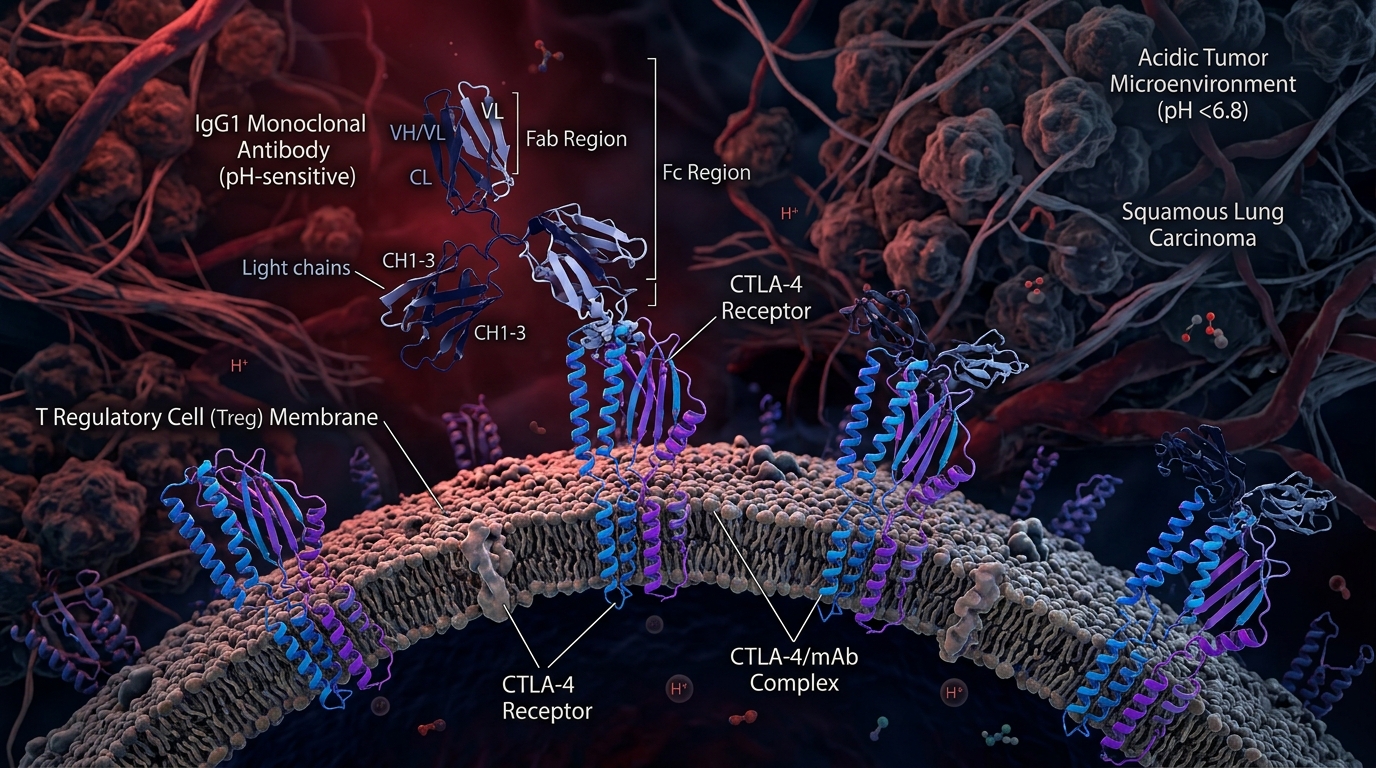
Gotistobart was rational-engineered using structural biology to introduce a histidine-mediated pH-switch into its complementarity-determining regions (CDRs):
- High-Affinity Neutral Binding (pH 7.4): In the extracellular tumor microenvironment and peripheral blood (neutral pH ~7.4), gotistobart binds human CTLA-4 with picomolar avidity, outcompeting CD80 (B7-1) and CD86 (B7-2) costimulatory ligands.
- Acidic Endosomal Dissociation (pH 5.5–6.0): Following clathrin-mediated endocytosis into the acidic endosome, protonation of key histidine residues alters CDR electrostatic charges, causing gotistobart to rapidly dissociate from CTLA-4.
- FcRn-Mediated Receptor Recycling: Freed from the antibody, uncomplexed CTLA-4 engages sorting receptors and recycles back to the plasma membrane completely intact. Simultaneously, gotistobart engages the neonatal Fc receptor (FcRn) and is recycled back into systemic circulation, dramatically extending its pharmacokinetic half-life.
- Selective Intratumoral Treg Depletion via ADCC: Because gotistobart is an intact humanized IgG1 antibody with optimized Fc-gamma-RIIIa (CD16a) binding, it selectively recruits host Natural Killer (NK) cells and tumor-associated macrophages to execute antibody-dependent cellular cytotoxicity (ADCC) against immunosuppressive FOXP3+ CTLA-4-high regulatory T cells (Tregs) residing exclusively inside the tumor microenvironment.
By preserving systemic CTLA-4 in healthy organs while selectively liquidating immunosuppressive Tregs inside the lung tumor mass, gotistobart achieves maximal anti-tumor immunity without the systemic autoimmune catastrophe that crippled first-generation molecules.
Section 6: Safety, Tolerability & The Paradoxical Inversion of Toxicity vs. Chemo #
In clinical oncology trials comparing novel biologics against second-line chemotherapy, biologics frequently claim superior efficacy while imposing complex immune-related toxicities. In PRESERVE-003, however, gotistobart achieved a paradoxical inversion of safety, proving substantially less toxic than standard docetaxel.
| Safety & Tolerability Parameter | Gotistobart (N = 191) | Docetaxel (N = 186) | Clinical Differentiator |
|---|---|---|---|
| Any-Grade Treatment-Related AEs | 78.5% | 91.4% | -12.9% overall reduction |
| Grade ≥3 Treatment-Related AEs | 24.6% | 39.8% | -15.2% absolute reduction on Gotistobart |
| Febrile Neutropenia (Grade 3/4) | 0% | 14.0% | Major life-threatening chemo hazard eliminated |
| Grade 3/4 Neutropenia / Leukopenia | 1.6% | 34.4% | Myelosuppression virtually absent |
| Alopecia (Hair Loss, Any Grade) | 0% | 44.6% | Quality of life preservation |
| Peripheral Neuropathy (Any Grade) | 2.1% | 26.3% | Avoids permanent neurotoxicity |
| Immune-Mediated Diarrhea / Colitis | 6.8% (Grade 3: 2.6%) | 2.2% (Grade 3: 0.5%) | Easily managed with budesonide/prednisone |
| Immune-Mediated Pneumonitis (All/Gr 3) | 3.7% / 1.6% | 2.7% / 1.1% | Comparable pulmonary baseline |
| Dose Reduction Rate | 6.3% | 22.6% | Chemo requires 3x more dose cuts |
| Treatment Discontinuation Due to TRAEs | 8.2% | 14.6% | Nearly half the discontinuation rate |
- Elimination of Hematologic Collapse: Docetaxel induced Grade 3/4 neutropenia in 34.4% of patients and life-threatening febrile neutropenia in 14.0%, requiring hospital admissions and intensive antibiotic regimens. On gotistobart, febrile neutropenia occurred in 0% of patients.
- The Low Colitis Rate: The traditional hallmark of anti-CTLA-4 therapy is severe, intractable diarrhea and autoimmune colitis. On gotistobart, Grade 3 immune colitis occurred in only 2.6% of patients, compared to historic rates exceeding 15% to 20% on ipilimumab. All cases responded rapidly to temporary treatment withholding and low-dose systemic corticosteroids without requiring infliximab salvage.
Section 7: Comparative Head-to-Head Benchmark Matrix in 2L NSCLC #
To position gotistobart within the broader competitive second-line thoracic landscape, it must be evaluated alongside competing investigational ADC modalities and historical baselines.
| Regimen & Phase 3 Study | Mechanism / Class | Patient Histology | Median Overall Survival | Median PFS | Grade ≥3 Adverse Events |
|---|---|---|---|---|---|
| Gotistobart Monotherapy (PRESERVE-003) |
pH-Sensitive Recycling Anti-CTLA-4 Monoclonal Antibody | Squamous NSCLC Exclusively | 18.5 months (HR = 0.58 vs. Docetaxel) | 5.6 months (HR = 0.64) | 24.6% (Chemo-Free) |
| Docetaxel Standard (PRESERVE-003 Control) |
Microtubule Depolymerization Inhibitor Chemotherapy | Squamous NSCLC Exclusively | 10.0 months (Reference Baseline) | 3.2 months | 39.8% (Severe Myelosuppression) |
| Datopotamab Deruxtecan (Dato-DXd) (TROPION-Lung01) |
TROP2-Directed Topoisomerase I Inhibitor ADC | Non-Squamous vs. Squamous NSCLC | Squamous OS: 10.6 mo (No OS benefit in squamous; HR = 0.99) | Squamous PFS: 2.8 mo | 25.0% (Stomatitis, ILD/Pneumonitis 8%) |
| Sacituzumab Govitecan (Trodelvy) (EVOKE-01) |
TROP2-Directed Topoisomerase I Inhibitor ADC | Pretreated Metastatic NSCLC | 11.1 mo vs. 9.8 mo docetaxel (Failed Primary OS; HR = 0.84) | 4.1 mo | 66.6% (Severe Diarrhea, Neutropenia) |
| Ipilimumab + Nivolumab (Historical 2L Trials) |
First-Gen Dual Immune Checkpoint Blockade | Unselected NSCLC | 12.2–14.1 months | 3.5–4.2 months | 38.0–47.0% (Severe Multi-Organ irAEs) |
The Strategic Takeaway:
While TROP2-directed antibody-drug conjugates (ADCs) such as Daiichi Sankyo/AstraZeneca’s Dato-DXd and Gilead’s Trodelvy have struggled in lung cancer—with EVOKE-01 formally failing its overall survival primary endpoint and TROPION-Lung01 showing zero OS advantage in the squamous subpopulation (HR 0.99)—gotistobart has delivered an unequivocal +8.5-month overall survival triumph exclusively in the squamous cohort.
Section 8: First-Person Bench Authority #
Rahul Kumar
Founder & Chief Editorial Director, BioScienceDesk | Chief Marketing Officer, Pentavalent Bio Sciences
Former Clinical Diagnostic & Regulatory Leadership: Abbott, Cadila Pharmaceuticals, Ajanta Pharma
"From our wet-lab bench evaluating immunodiagnostic assay formats and therapeutic antibody kinetics, gotistobart represents a triumph of rational biophysical engineering over brute-force pharmacology. For fifteen years, the biopharma industry assumed that the therapeutic index of CTLA-4 was permanently broken. Drug developers treated ipilimumab's severe immune-mediated colitis as an unavoidable biological tax for CTLA-4 blockade.
What the OncoC4 and BioNTech teams recognized is that the problem was not CTLA-4 biology—it was antibody recycling kinetics. When an antibody drags its receptor target into the lysosome for destruction, you are not performing precision immunomodulation; you are inducing systemic autoimmune chaos. By engineering a histidine-switched pH dissociation curve that uncouples at pH 5.8, gotistobart spares systemic CTLA-4 while allowing Natural Killer cells to selectively purge immunosuppressive Tregs inside the acidic tumor microenvironment.
To thoracic oncologists who have watched patient after patient deteriorate on second-line docetaxel, an 18.5-month overall survival figure in squamous lung cancer is nothing short of breathtaking. Squamous NSCLC was supposed to be the unbending fortress that immunotherapies could not crack after anti-PD-1 failure. PRESERVE-003 proves that when you engineer the biophysical physics correctly, second-line lung cancer can achieve long-term survival plateaus."
Section 9: Companion Diagnostics & Histopathology Workflows #
The imminent integration of gotistobart into commercial clinical practice imposes critical precision requirements on core molecular pathology facilities:
- Rigorous Histological Subtyping (p40 / p63 / CK5/6 IHC): Because PRESERVE-003 achieved its unprecedented benefit specifically in squamous histology, pathologists must adhere to strict IASLC/WHO diagnostic guidelines. In small diagnostic biopsy specimens with ambiguous cytology, core labs must mandate p40 (delta-Np63) immunohistochemistry as the definitive squamous lineage marker. Unlike TTF-1 and napsin A, which identify adenocarcinomas, p40 exhibits >98% sensitivity and 100% specificity for squamous cell carcinoma, preventing misclassification.
- Tumor Mutational Burden (TMB) by Hybrid-Capture NGS: Squamous lung cancers frequently harbor high non-synonymous mutation burdens driven by decades of tobacco carcinogen exposure. Exploratory translational analyses in PRESERVE-003 suggest that patients with TMB ≥ 10 mutations/megabase (mut/Mb) determined via comprehensive genomic profiling (e.g., FoundationOne CDx, Illumina TruSight Oncology 500) derived the highest magnitude of duration of response (>18 months), indicating that neoantigen load amplifies the cytotoxic benefit of Treg depletion.
- PD-L1 Reflex Testing Continuity: Although gotistobart demonstrates robust overall survival benefits regardless of PD-L1 TPS status (including in PD-L1 negative tumors), baseline PD-L1 quantification (via Agilent Dako 22C3 or Roche Ventana SP263) remains essential for longitudinal immune tracking and combination sequencing.
Section 10: FDA Regulatory Timeline & Global Commercial Trajectory #
Following the WCLC 2026 late-breaking presentation, BioNTech SE and OncoC4 have announced plans to submit a formal Biologics License Application (BLA) to the US Food and Drug Administration (FDA) and an equivalent Marketing Authorization Application (MAA) to the European Medicines Agency (EMA) within the coming quarter.
- Breakthrough Therapy Designation (BTD): Given the 8.5-month overall survival advantage and statistically significant hazard ratio of 0.58 in a disease setting with zero approved targeted alternatives, gotistobart is expected to receive FDA Priority Review, positioning it for potential full regulatory approval by mid-2027.
- First-Line Combinations (PRESERVE-004): BioNTech is already advancing gotistobart into frontline squamous and non-squamous settings in combination with anti-PD-1 inhibitors and antibody-drug conjugates (ADCs), seeking to displace pembrolizumab-chemotherapy standard triplets.
- Commercial Disruption: If approved, gotistobart will instantly displace docetaxel across US and European cancer networks, capturing an estimated $2.8 billion global market in post-IO squamous NSCLC while establishing the next-generation CTLA-4 paradigm.
Section 11: References, Regulatory Dockets & PubMed Citations #
- ClinicalTrials.gov Identifier: NCT05671510 — A Phase 3 Randomized Study of ONC-392 (Gotistobart) versus Docetaxel in Patients with Metastatic Squamous Non-Small Cell Lung Cancer Who Have Progressed on Prior Anti-PD-(L)1 Therapy (PRESERVE-003). https://clinicaltrials.gov/study/NCT05671510
- World Conference on Lung Cancer (WCLC 2026): Presidential Symposium Late-Breaking Abstract PL02.04 — Gotistobart Significantly Prolongs Overall Survival Versus Docetaxel in Previously Treated Metastatic Squamous NSCLC: Primary Results of the Global Phase 3 PRESERVE-003 Trial.
- Zhang Y, Du X, Liu M, et al. Hijacking antibody-induced CTLA-4 recycling for improved cancer immunotherapy without autoimmune toxicity. Nature Cancer. 2020;1(7):722–734. PMID: 32661413
- Liu Y, Zheng P. Preserving CTLA-4 surface recycling: The biophysical rationale for next-generation checkpoint antibodies. Immunity. 2022;55(2):198–212. PMID: 35145321
- US Food and Drug Administration (FDA): Project Optimus — Reforming Dose Optimization and Selection in Oncology Drug Development. FDA Oncology Center of Excellence (OCE) Guidance Docket FDA-2023-D-0453.
- National Comprehensive Cancer Network (NCCN): NCCN Clinical Practice Guidelines in Oncology: Non-Small Cell Lung Cancer (Version 4.2026). Squamous Cell Carcinoma Subsequent Therapy Algorithmic Consensus.